




Roger Dubuis rende omaggio a uno dei momenti più emblematici della storia del Giappone del XVII secolo.
Attraverso il proprio savoir-faire nell’alta orologeria e nei Métiers d’Art, la Maison reinterpreta i simboli culturali di quell’epoca: il Castello di Edo e dodici comandanti samurai, raffigurati attraverso il loro Kabuto (elmo) e Kamon (stemma).
Al centro, il calibro automatico RD821, certificato dal Poinçon de Genève, rende possibile la straordinaria espressività del segnatempo.
Con Excalibur The Kabuto Legacy, Roger Dubuis porta l’alta orologeria nel cuore della storia autentica del Giappone, dando vita a un orologio che celebra la cultura samurai attraverso raffinate espressioni dei Métiers d’Art e un approccio creativo distintivo.

UNITI INTORNO AD UN TAVOLO
Questa nuova creazione trae ispirazione dal XVII secolo, un’epoca segnata da grandi tensioni, quando il Giappone era ancora diviso da guerre incessanti. In una terra frammentata, signori della guerra rivali si contendevano il potere con instancabile ambizione.
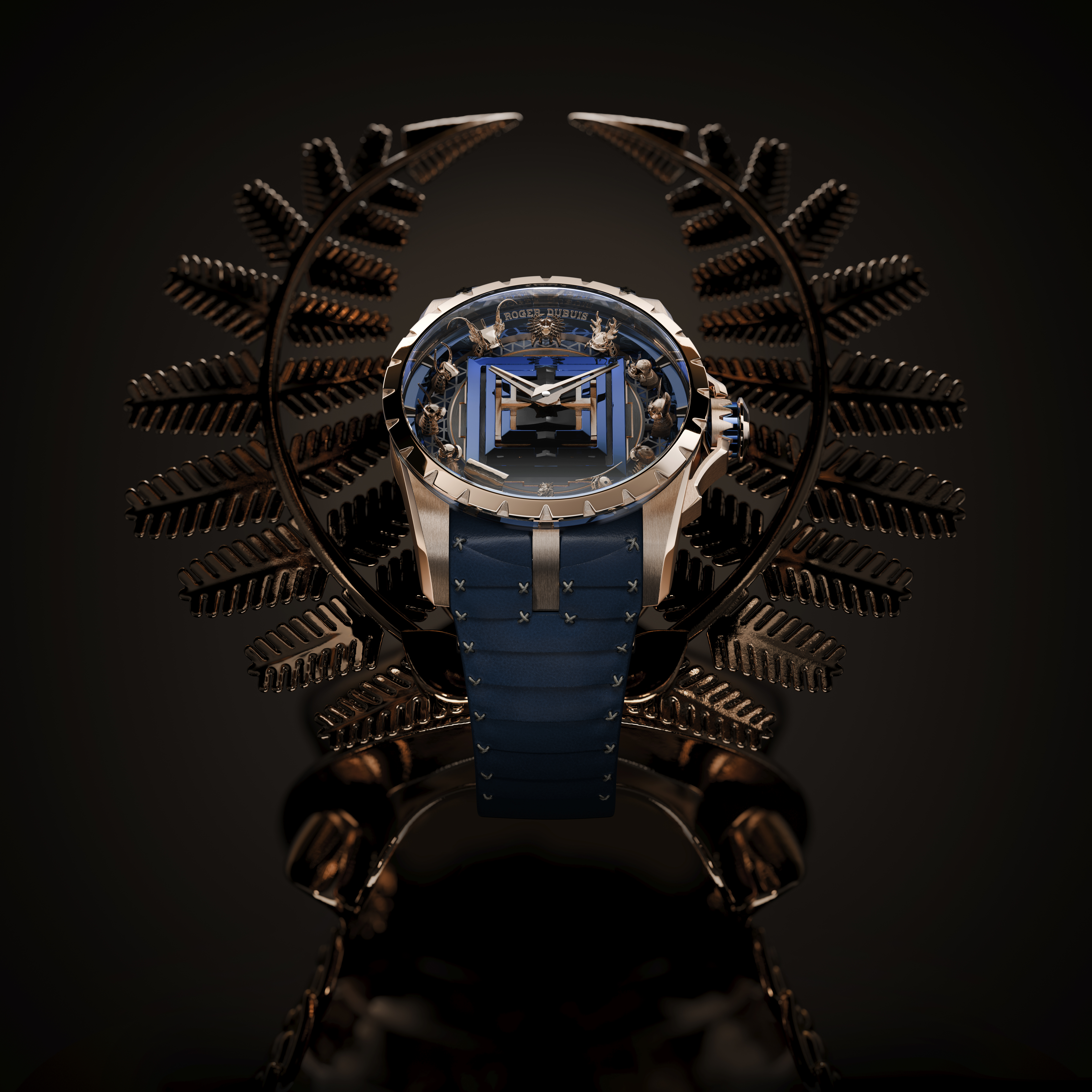
Una svolta, tuttavia, era ormai vicina, grazie all’impulso di tre figure straordinarie. I bushō del Paese (comandanti samurai) furono riuniti sotto una nuova visione politica. Da quel momento il Giappone intraprese un nuovo cammino che avrebbe portato oltre 250 anni di unità, pace e prosperità, con il Castello di Edo a rappresentare il cuore simbolico di una società rinnovata.

Nel concepire questo segnatempo, Roger Dubuis si ispira a quello spirito di coesione: il momento in cui il conflitto lasciò spazio a un’armonia destinata a durare nel tempo.
IL KABUTO, SIMBOLO DI IDENTITÀ
Nel Giappone di quell’epoca in trasformazione, ciascuno dei bushō riuniti sotto il nuovo ordine era rappresentato dal proprio Kabuto: un elmo al tempo stesso cerimoniale e protettivo, espressione del proprio lignaggio, della propria filosofia e delle proprie aspirazioni.

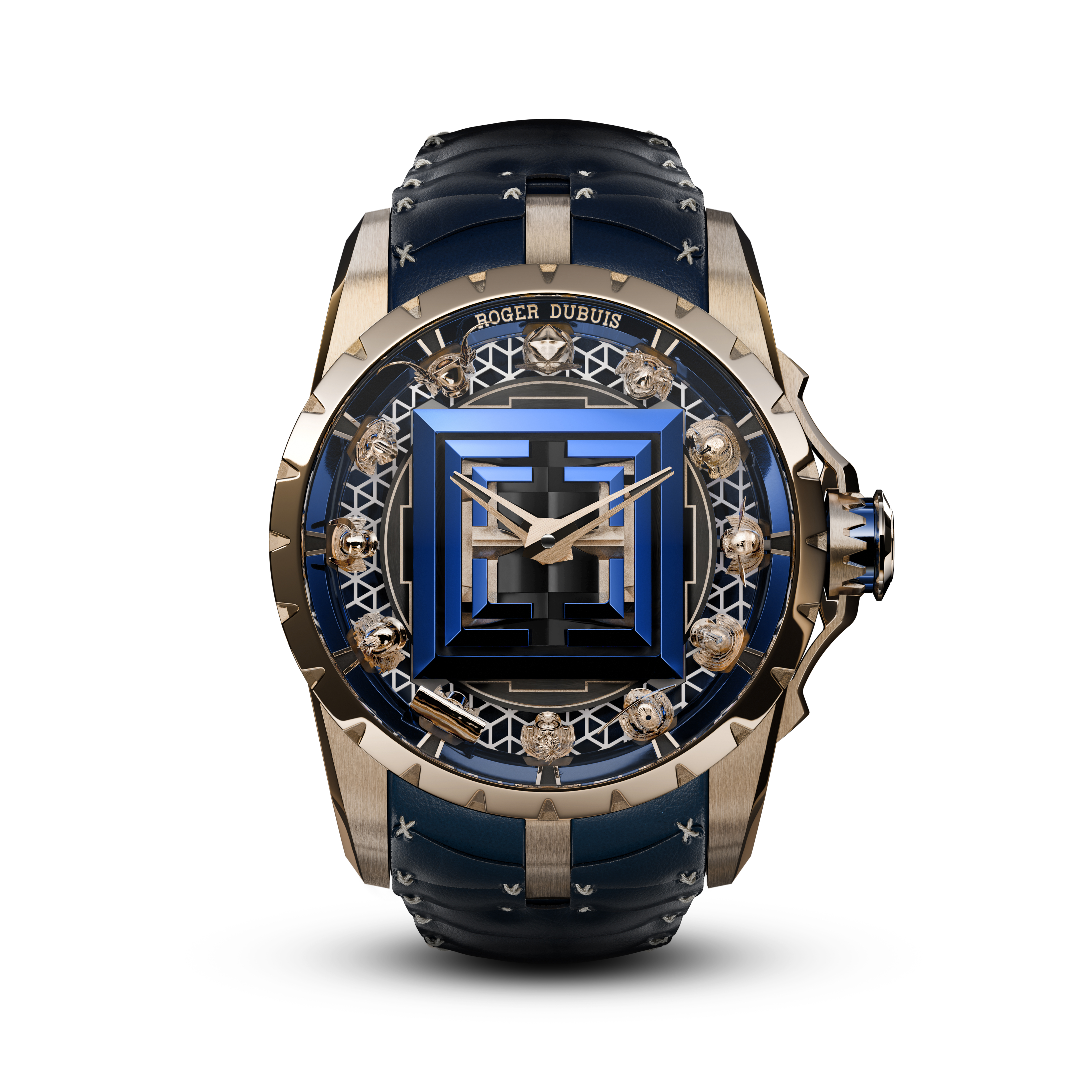
Il Kabuto rappresenta anche una straordinaria testimonianza di maestria artigianale, il filo conduttore che lega questa storia all’alta orologeria di Roger Dubuis. Per rendere omaggio a questo affascinante capitolo della storia giapponese, la Maison ha scelto di reinterpretare sul quadrante i Kabuto di dodici celebri bushō.

Attraverso la precisione dei Métiers d’Art, i Kabuto micro-scolpiti vengono ricreati fedelmente in oro rosa 18 carati, rivelando un simbolismo unico e preziosi dettagli incisi a mano. La realizzazione di ciascun Kabuto richiede dai due ai tre giorni di lavoro specializzato, mentre gli elementi più complessi da realizzare sono gli iconici ornamenti frontali degli elmi, che identificavano i bushō e ne esprimevano l’unicità.
I SAMURAI RAFFIGURATI SUL QUADRANTE
Il cerchio prende forma a ore 12 con lo shōgun, Tokugawa Ieyasu, uno dei principali artefici dell’unificazione del Giappone. Il suo Kabuto è decorato da una felce, simbolo di successo e longevità.

I leggendari comandanti samurai che combatterono al fianco di Tokugawa Ieyasu divennero noti come i Quattro Re Celesti di Tokugawa. Ognuno di loro trova posto attorno a questo simbolico tavolo rappresentato sul quadrante:
A ore 1 compare Honda Tadakatsu, comandante celebre per la sua lealtà a Tokugawa e la cui integrità contribuì a definire per generazioni il codice morale del Paese. Il suo iconico Kabuto, ornato da palchi di cervo, è simbolo di protezione divina.
A ore 2 si trova Sakai Tadatsugu, statista di grande saggezza e comandante di riconosciuto valore sul campo di battaglia, che contribuì a porre le fondamenta del governo Tokugawa. Il suo Kabuto incarna l’apice della maestria artigianale, con un elemento frontale a forma di spada che simboleggia la rettitudine e la capacità di allontanare il male.
A ore 4 prende posto Sakakibara Yasumasa, ricordato per il suo giudizio equilibrato. Il suo Kabuto, decorato con una spada, richiama la forza della virtù marziale e l’anima del samurai, evocando al tempo stesso la capacità di distinguere la verità dall’inganno.
A ore 9 compare Ii Naomasa, comandante noto per le sue doti diplomatiche. Il suo Kabuto simboleggia il coraggio ed è caratterizzato dagli imponenti tenshō (ornamenti a forma di corna) che si innalzano ai lati dell’elmo.
Completano la composizione altri sette samurai, ciascuno rappresentato attraverso il proprio caratteristico Kabuto.
IL CASTELLO DI EDO
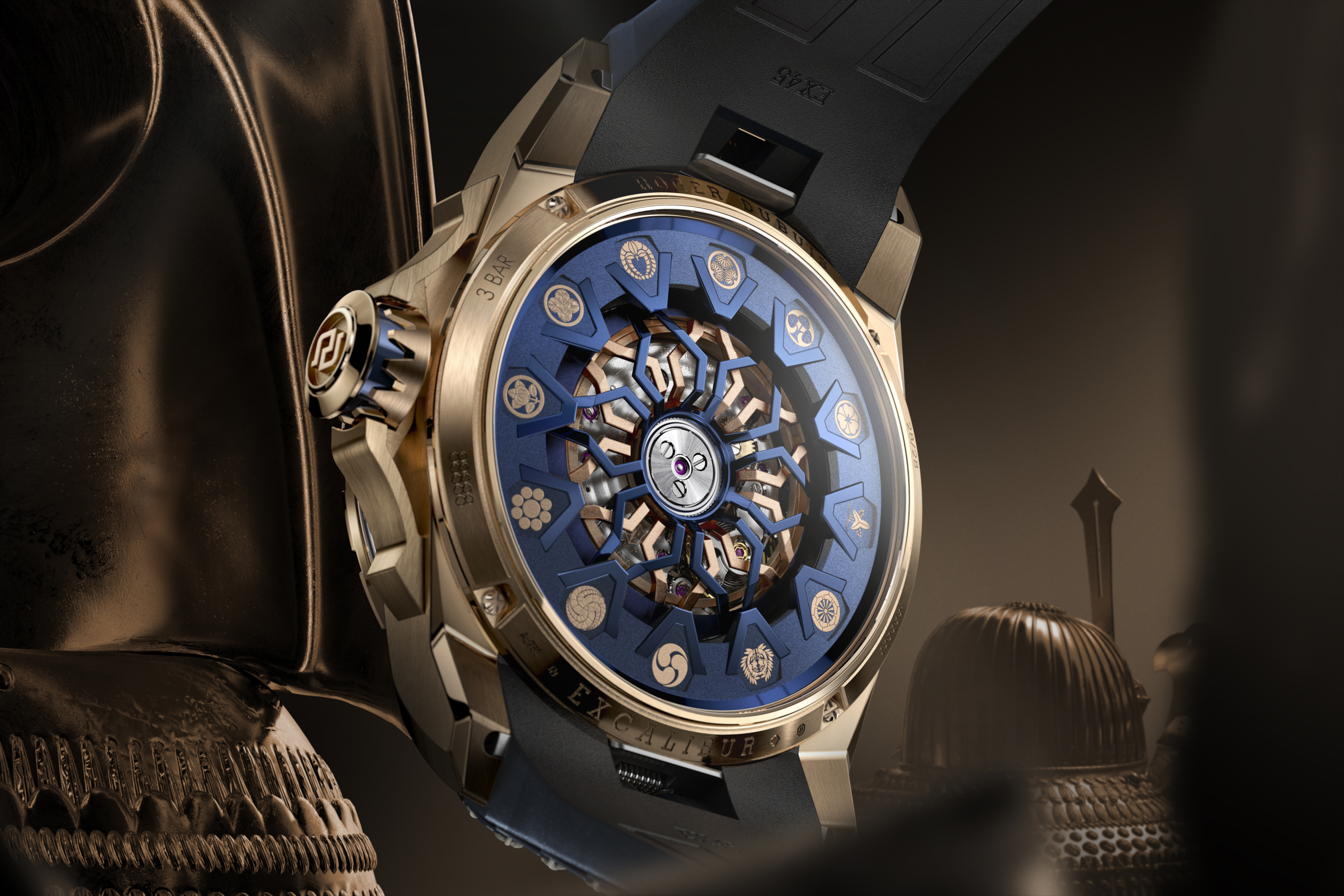
Al centro del quadrante, Roger Dubuis reinterpreta l’architettura del Castello di Edo. Attraverso un linguaggio astratto e contemporaneo, l’imponente fortezza prende forma in una profonda tonalità di blu, ispirata all’indaco tradizionalmente utilizzato per le vesti dei samurai e successivamente divenuto un elemento distintivo dell’arte e della tradizione tessile giapponese. La costruzione stratificata presenta finiture decorative su ogni superficie, alternando superfici lucide, lucidature a specchio, satinature circolari e sabbiature. Un gioco di contrasti che valorizza la struttura del castello e ne esalta la presenza al centro della composizione.

L’INGEGNO MECCANICO
Limitato a 28 esemplari, Excalibur The Kabuto Legacy propone una cassa da 45 mm in oro rosa 18 carati e presenta una corona impreziosita da un anello in smalto blu. Il segnatempo è completato da un cinturino in pelle di vitello blu, realizzato con una distintiva lavorazione ispirata alla struttura delle armature samurai. L’omaggio ai dodici bushō prosegue sul fondello, dove i loro dodici stemmi sono incisi al laser su un anello in oro rosa rivestito di blu. Il tutto è protetto da un vetro zaffiro che lascia ammirare l’elaborato rotore del movimento.
È grazie al calibro RD821 che prende vita la straordinaria espressività di questo segnatempo. L’architettura del movimento automatico lascia infatti ampio spazio alla ricchezza estetica e narrativa della composizione. Dotato di 60 ore di riserva di carica e rifinito attraverso 14 diverse tecniche decorative, questo calibro creato in-house è certificato dal prestigioso Poinçon de Genève.

UN OMAGGIO AUTENTICO ALLA STORIA GIAPPONESE
Per garantire accuratezza storica e autenticità a questa creazione, Roger Dubuis ha collaborato con Frederik Cryns, professore di storia giapponese e consulente per la pluripremiata serie televisiva Shōgun. Grazie alla sua competenza, ogni dettaglio del progetto ha potuto prendere forma nel modo più fedele possibile alla storia e alla cultura che lo hanno ispirato.
A questo proposito, Frederik Cryns commenta: “La cultura samurai ha dato vita ad alcune delle più straordinarie forme d’arte indossabile nella storia dell’umanità. Il fatto che questa tradizione di eccellenza artigianale incontri oggi l’arte dell’alta orologeria appare del tutto naturale. Entrambe le discipline condividono la stessa, instancabile ricerca dell’eccellenza.“
RDDBEX1 139 – EXCALIBUR THE KABUTO LEGACY
Edizione limitata di 28 esemplari
Poinçon de Genève
Microsculture distintive
Métiers d’Art
KEY MESSAGES
Roger Dubuis rende omaggio a uno dei momenti più emblematici della storia del Giappone del XVII secolo.
Attraverso il proprio savoir -faire nell’alta orologeria e nei Métiers d’Art, la Maison reinterpreta i simboli culturali di quell’epoca: il Castello di Edo e dodici comandanti samurai, raffigurati attraverso il loro Kabuto (elmo) e Kamon (stemma)
Al centro, il calibro automatico RD821, certificato dal Poinçon de Genève, rende possibile la straordinaria espressività del segnatempo.
MOVIMENTO
Calibro RD 821
Carica automatica
La Manifattura realizza internamente con maestria 14 diverse finiture sul calibro RD821, comprese quelle richieste per la certificazione del Poinçon de Genève. Ogni finitura viene eseguita meticolosamente su ogni superficie di ciascun componente del movime nto, dando vita a un raffinato gioco di contrasti tra superfici satinate e lucide. Questa lavorazione accurata esalta i riflessi della luce, cifra distintiva dell’alta orologeria ginevrina.
FREQUENZA: 4 Hz / 2 8.800 Alternanze/ora
RISERVA DI CARICA: 48 ore
DIAMETRO: LINEE 1 1’ ½
SPESSORE: 3,5 mm
NUMERO DI COMPONENTI: 172
NUMERO DI RUBINI: 33
CASSA
CASSA in oro rosa 750/1000 con anello in vetro zaffiro sotto la lunetta. Fondello a vista.
Emblemi incisi al laser
Anello in vetro zaffiro all’interno della corona
DIAMETRO : 4 5 mm
SPESSORE: 1 6,87 mm
IMPERMEABILITA’: 3 BAR ( 30m )
QUADRANTE
Castello composto da 17 elementi
4 tecniche decorative
7 elementi del tetto in oro rosa con rivestimento in CVD blu
6 elementi del tetto in oro rosa con rivestimento PVD nero
3 elementi strutturali in oro rosa
Pavimentazione del castello in oro rosa 750/1000 con riferimento PVD nero e decoro inciso al laser
Anello in oro rosa 750/1000 con 12 elmi incisi a mano in oro rosa 750/1000
Flangia con trattamento CVD e finitura lucida
SFERE
Sfere delle ore e dei minuti in oro rosa con finitura satinata e spazzolata
CINTURINO
Cinturino in pelle di vitello con inserti fissati e cuciti
Pelle con finitura patina ta ispirata alle armature storiche
Intercambiabile grazie al sistema QRS
Cinturino in pelle aggiuntivo
FIBBIA
Tripla fibbia déployante in oro rosa 750/1000, intercambiabile grazie al sistema QRS (Quick Release System).
1 O’CLOCK – HONDA TADAKATSU (1548–1610)
“The Warrior Who Surpassed Death.” One of the Four Heavenly Kings, Tadakatsu fought in over fifty-seven battles without receiving a single wound.
His presence at Anegawa, Mikatagahara, Komaki, and Sekigahara secured Tokugawa dominance. Beyond warfare, his legendary loyalty and integrity established the moral standard for generations of Tokugawa retainers, proving that honor and effectiveness could be unified.
KABUTO
DEER ANTLER WAKIDATE KABUTO
鹿角脇立兜 (Kazuno Wakidate Kabuto)
The most iconic of all samurai helmets, featuring magnificent deer antler crests rising from the sides. According to legend, a sacred deer guided Ieyasu’s forces to safety across a flooded river, and Tadakatsu adopted the antlers as divine protection from Hachiman, the god of war, as he thought the deer was the god himself. Made from lacquered washi paper for lightness, symbolizing swift, decisive action.
KAMON
HONDA STANDING HOLLYHOCK (HONDA TACHI AOI)
A standing hollyhock variant distinguishing the Honda from their Tokugawa lords. The upright form suggests steadfast loyalty rising in devoted service.
2 O’CLOCK – SAKAI TADATSUGU (1527–1596)
The elder statesman among the Four Heavenly Kings. Tadatsugu’s wisdom guided Ieyasu through the dangerous alliance with Oda Nobunaga and the complex politics following Nobunaga’s death. His administrative skills complemented his battlefield prowess, helping establish the foundations of Tokugawa governance. Though he passed before Sekigahara, his contributions shaped the loyal retainer corps that achieved victory.
KABUTO
RIDGED KABUTO WITH SWORD MAEDATE
三十八間金覆輪筋兜・剣形前立 (Sanjūhachi-ken Kin-Fukurin Suji-Kabuto · Ken-Nari Maedate) A commanding helmet constructed of thirty-eight ridged vertical plates with gilt rims. The suji-kabuto style represents the pinnacle of Japanese helmet craft, while the sword-shaped front crest symbolizes righteousness and the decisive cutting away of evil. This combination reflects Tadatsugu’s role as both warrior and trusted advisor.
KAMON
WOOD SORREL IN CIRCLE (MARU NI KATABAMI)
A wood sorrel leaf enclosed within a circle, one of Japan’s Ten Great Crests. The katabami plant is renowned for its tenacious vitality, symbolizing the prosperity of descendants across generations.
3 O’CLOCK – MIZUNO KATSUNARI (1564–1651)
A cousin of Ieyasu, Katsunari served with distinction throughout the unification campaigns. At Sekigahara, he commanded forces guarding Ōgaki Castle, accepting its surrender after the Eastern victory.
His long life (87 years) spanning the entire transition from war to peace made him a living link between the tumultuous past and the stable present, a testament to the endurance of those who built the new order.
KABUTO
BLACK-LACQUERED CHINESE CAP WITH SHIGAMI MAEDATE
黒漆塗唐冠形兜・黒漆塗魍(獅噜)前立 (Kuro Urushi-Nuri Tōkan-Nari Kabuto · Kuro Urushi-Nuri Shigami Maedate)
A dignified Chinese cap helmet in black lacquer, featuring a fearsome wooden lacquered shigami (lion-biting) front crest. The shigami represents protection against evil spirits and the ferocity needed for victory on the battlefield. The elegant tōkan form balanced with the aggressive crest embodies disciplined aggression.
KAMON
WATER PLANTAIN (MIZUNO OMODAKA)
A stylized water plantain (omodaka), depicting the leaves and flowers of a plant that grows in rice paddies and ponds. The arrow-shaped leaves gave omodaka the nickname “victory grass” (kachiikusa gusa), making it beloved by warriors.
4 O’CLOCK – SAKAKIBARA YASUMASA (1548–1606)
The steadfast guardian, one of the Four Heavenly Kings. At Sekigahara, Yasumasa commanded the rear guard protecting Tokugawa Hidetada at the siege of Ueda Castle, ensuring the heir’s safety. His unwavering loyalty and sound judgment made him essential to Ieyasu’s survival through decades of conflict. He exemplified the principle that true strength lies in protecting what matters most.
KABUTO
ORNAMENTAL SWORD-SHAPED MAEDATE
刀形前立 (Katana-Nari Maedate)
An elegantly decorated helmet featuring an ornamental sword- shaped front crest. The sword represents martial virtue and the samurai’s soul. Sakakibara was known for his measured judgment and unwavering loyalty, qualities symbolized by the blade’s straight, true form, cutting through deception to reveal truth.
KAMON
GENJI WHEEL (GENJI GURUMA)
A wheel design with extending spokes, symbolizing ceaseless motion and the eternal cycle of service. The wheel turns, yet the center remains faithful.
5 O’CLOCK – DATE MASAMUNE (1567–1636)
The “One-Eyed Dragon” of the north. Although too young to participate in the unification wars proper, Masamune secured the northeastern frontier for the Tokugawa. During Sekigahara, his campaigns against enemy forces in Tōhoku prevented reinforcements from reaching the Western army. As lord of Sendai, he built one of Japan’s most prosperous domains and pursued international diplomacy, embodying the cultural flourishing of the peace he helped secure.
KABUTO
CRESCENT MOON MAEDATE KABUTO
三日月形前立兜 (Mikazuki-Nari Maedate Kabuto)
The most famous silhouette in samurai history: a sleek black helmet crowned with a magnificent golden crescent moon. Designed by Masamune’s father Terumune to pair with the sun-disk battle standard, the asymmetrical crescent (shorter on the sword arm side) embodies both celestial protection and practical battlefield design.
KAMON
BAMBOO AND SPARROWS (TAKE NI SUZUME)
Sparrows amid bamboo representing resilience and prosperity.
6 O’CLOCK – ITAKURA KATSUSHIGE (1545–1624)
The architect of civil order. As the first Kyoto Shoshidai (Deputy) and Edo Town Magistrate, Katsushige established the administrative systems that governed Japan’s cities during the peace. His judicious governance of Kyoto, managing relations with the imperial court and Buddhist temples, demonstrated that Tokugawa rule would bring stability. His contributions were administrative rather than martial, yet equally essential.
KABUTO
HEAD-SHAPED KABUTO WITH BIRD FEATHER ORNAMENT
鳥毛付頭形兜 (Torige-tsuki Zunari Kabuto)
A practical zunari (head-shaped) helmet adorned with dramatic bird feather decorations. The feathers symbolize swiftness and keen perception, appropriate for a man who served as magistrate of Edo and Kyoto. The streamlined helmet base reflects the practical wisdom required for governance rather than mere battlefield glory.
KAMON
SWIRL MOTIF (ITAKURA TOMOE / TOMOEKUYŌ)
Nine left-turning triple tomoe arranged in a kuyō (nine-planet) formation—one larger tomoe at the center surrounded by eight smaller ones. The tomoe is a comma-shaped swirl representing flowing water
7 O’CLOCK – KURODA NAGAMASA (1568–1623)
Son of the legendary strategist Kuroda Kanbei, Nagamasa proved equally formidable in both battle and diplomacy. At Sekigahara, he fought valiantly and, crucially, negotiated the defection of Kobayakawa Hideaki—the betrayal that shattered the Western army. His father had helped build Hideyoshi’s empire; Nagamasa helped dismantle it to create something more enduring. As first lord of Fukuoka, he built a domain that prospered for centuries.
KABUTO
SILVER-LEAFED ICHINOTANI KABUTO
銀箔押一の谷形兜 (Ginpaku-Oshi Ichinotani-Nari Kabuto)
A striking helmet representing the cliff at Ichinotani, site of Minamoto Yoshitsune’s legendary cavalry charge. Silver-leafed cypress boards recreate the famous precipice, originally worn by Fukushima Masanori and exchanged in reconciliation. Nagamasa wore this in battle at Sekigahara, carrying the spirit of bold, decisive action.
KAMON
WISTERIA CIRCLE (KURODA FUJI DOMOE)
A stylized wisteria in circular arrangement, derived from the aristocratic Fujiwara clan lineage. The cascading wisteria suggests nobility descending through generations.
8 O’CLOCK -HOSOKAWA TADAOKI (1563–1646)
A warrior of refined sensibilities, Tadaoki mastered both sword and tea ceremony under the greatest teachers of his age. At Sekigahara, he fought fiercely for the Eastern cause while his beloved wife Gracia sacrificed herself rather than become a Western hostage. His domain of Kumamoto became a center of culture and prosperity. Tadaoki embodied the transformation from warrior to cultivated lord that peace made possible.
KABUTO
BLACK-LACQUERED ZUNARI WITH BIRD FEATHER CREST
黒 漆 塗 頭 形 兜 ・ 鳥 毛 頭 立 (Kuro Urushi-Nuri Zunari Kabuto · Torige Kashiradate)
A sophisticated zunari helmet finished in distinctive black lacquer, crowned with elegant bird feather crests. The refined aesthetics reflect Tadaoki’s dual nature as both fierce warrior and accomplished tea master, trained by Sen no Rikyū. Beauty and lethality unified in a single statement.
KAMON
NINE-PLANET STAR (KU-YŌ MON)
Nine circles representing celestial bodies: the sun, moon, five planets, and two nodes associated with eclipses. Legend holds that Tadaoki admired this pattern on Oda Nobunaga’s knife and was granted permission to adopt it as his crest. The design invokes cosmic protection and enduring celestial order.
9 O’CLOCK – II NAOMASA (1561–1602)
Commander of the fearsome “Red Devils,” Naomasa revived his nearly- extinct clan to become one of the Four Heavenly Kings. At Sekigahara, his red-armored cavalry led the historic first charge. Beyond military valor, Naomasa demonstrated diplomatic brilliance, negotiating crucial defections that guaranteed Eastern victory. He received the highest reward among Ieyasu’s vassals, founding the influential Hikone domain.
KABUTO
RED-LACQUERED KABUTO WITH GOLDEN TENSHŌ WAKIDATE
赤備えの兜・本金箔大天衝脇立 (Aka Zonae no Kabuto · Honkinpaku Dai- Tenshō Wakidate)
The legendary crimson helmet of the “Red Devils,” featuring towering gold-leafed tenshō (ceremonial ornament) crests extending from either side. Red symbolized bravery and the inheritance of thefearsome Takeda cavalry tradition. The massive golden crests were exclusive to the Ii clan lords, marking the commander in the thick of battle.
KAMON
HIKONE CITRUS BLOSSOM (HIKONE TACHIBANA)
The flower and fruit of the tachibana, a native Japanese citrus whose evergreen leaves symbolize eternity. According to legend, a tachibana tree stood beside the well where the Ii clan’s founder was discovered as an infant, binding the clan’s origins to this most auspicious of trees.
10 O’CLOCK – ASANO NAGAMASA (1547–1611)
Related to Toyotomi Hideyoshi through marriage and one of the Five Commissioners, Nagamasa navigated the treacherous transition from Toyotomi to Tokugawa service. He recognized that supporting Ieyasu offered the best path to lasting stability. His descendants would rule Hiroshima for generations, prospering under the peace he helped establish.
KABUTO
BLACK-LACQUERED PEACH-SHAPED WITH GREAT WATER BUFFALO WAKIDATE
大水牛脇立黒漆桃形兜 (Dai-Suigyū Wakidate Kuro Urushi Momonari Kabuto)
A peach-shaped (momonari) helmet in black lacquer, crowned with massive water buffalo horn crests. The buffalo horns project power and indomitable strength, while the peach shape was believed to ward off evil. This commanding silhouette announced the presence of a formidable commander on the battlefield.
KAMON
CROSSED HAWK FEATHERS (ASANO CHIGAI TAKANOHA)
Crossed hawk feathers signifying martial prowess and sharp perception. The hawk strikes with precision; the Asano served with similar accuracy.
11 O’CLOCK – KATŌ YOSHIAKI (1563–1631)
A master of naval warfare, Yoshiak fought, at Sekigahara, among the Eastern vanguard, contributing to the decisive victory. After the battle, he received Iyo Matsuyama Domain, where his maritime expertise proved valuable as the Seto Inland Sea’s waters transformed from theaters of war to arteries of peaceful commerce. He later became lord of Aizu, one of the largest domains in Japan.
KABUTO
POINTED HOOD KABUTO WITH BIRD TAIL ORNAMENT
角頭巾形鳥尾飾兜 (Kaku Zukin-Nari Torio Kazari Kabuto)
An unusual pointed hood-shaped helmet decorated with dramatic bird tail feathers. The angular hood form suggests scholarly wisdom combined with practical command, while the bird tail ornaments convey swiftness and noble bearing. This distinctive combination reflects Katō’s reputation for both intellect and naval prowess.
KAMON
DESCENDING WISTERIA (SAGARI FUJI)
A stylized wisteria with cascading flower clusters hanging downward. The wisteria (fuji) was one of Japan’s most popular kamon motifs, associated with the prestigious Fujiwara clan lineage.